
The Lake District at a glance
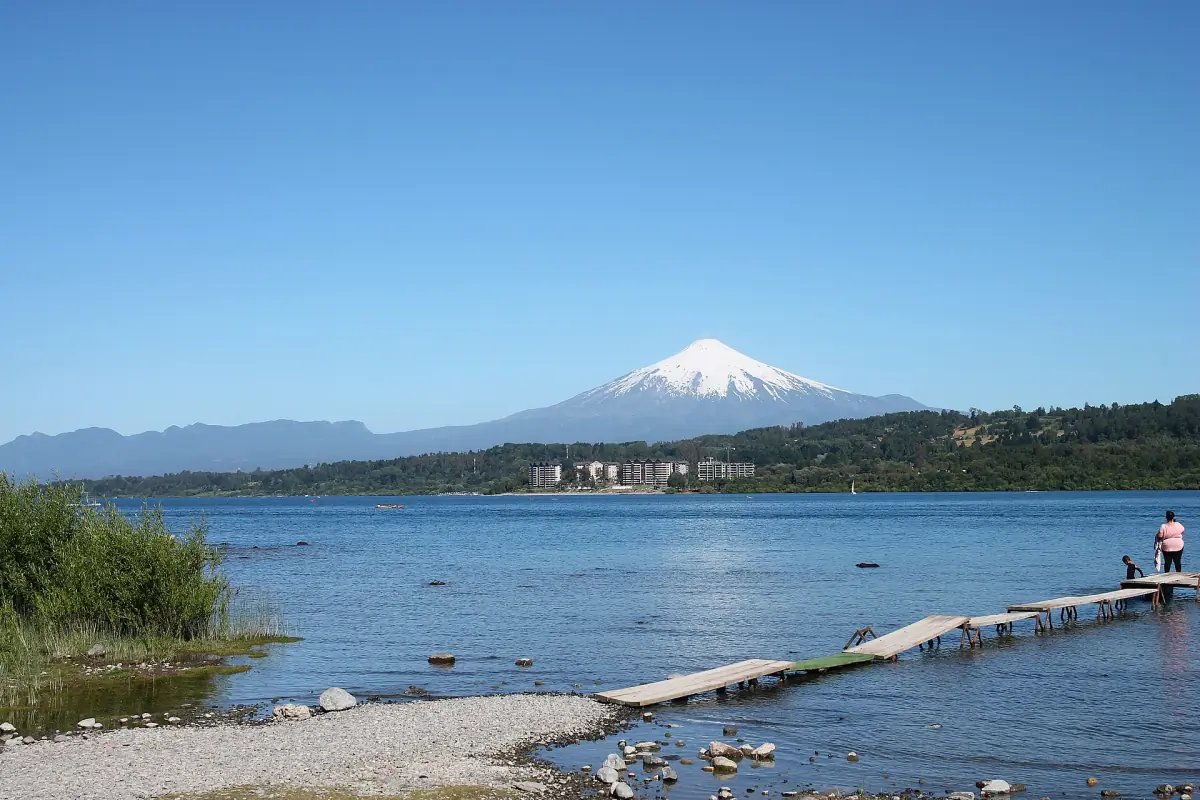
The area around Villarrica and Pucón is the northern end of what travelers call the Chile Lake District. Here you find the Villarrica volcano, the lakes of Villarrica, Caburgua and Calafquén, thermal springs and several national parks. Further south, around Lake Llanquihue, the landscape is dominated by the Osorno volcano.
The two parts are different trips. Villarrica and Pucón are the main bases on this site. Puerto Varas is a separate base in the south, and the way between them is long enough to plan as its own travel day. This is an independent guide and is not run by any tourism board or operator.
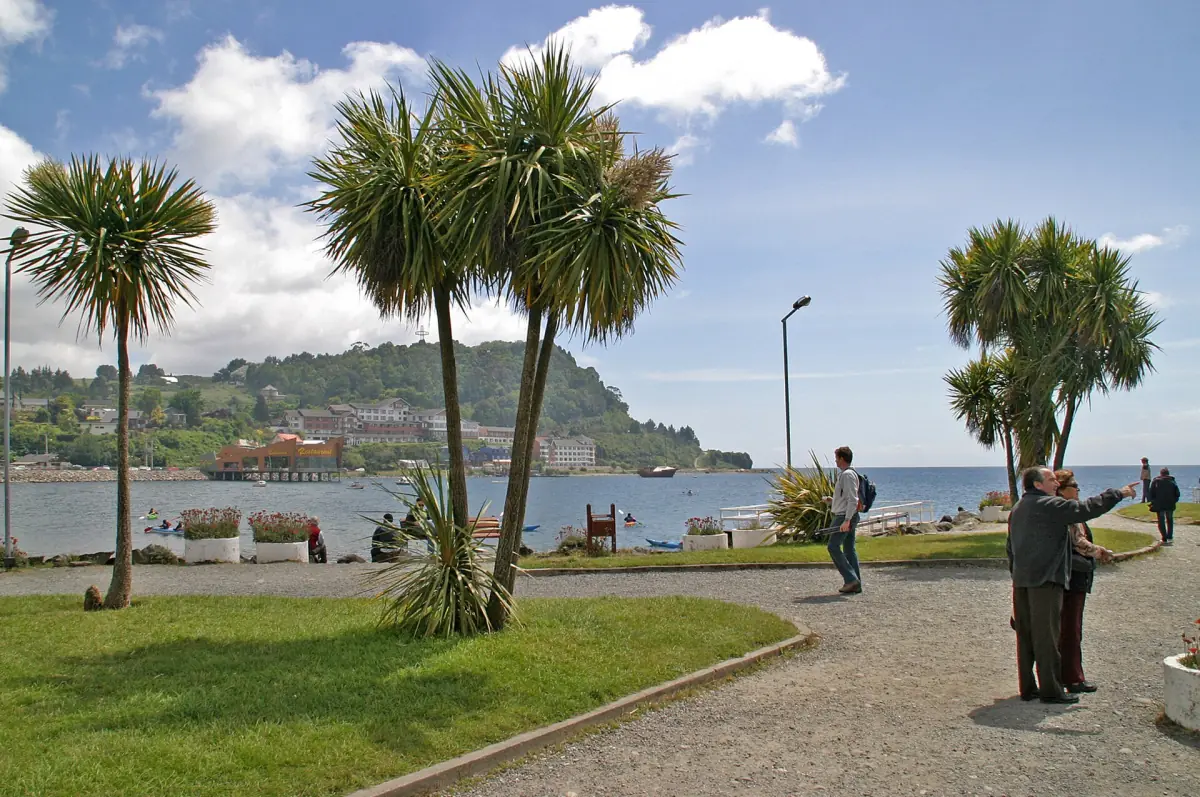
How the region fits together
Stops from north to south and what sets them apart.
Villarrica and Pucón
Two separate towns on Lake Villarrica in the Araucanía. They are different bases and not two names for one place. The volcano, the Huerquehue and Villarrica national parks and the Trancura river are all close.
Pucón guide →Lican Ray and Coñaripe
Lake Calafquén lies to the south of Villarrica. Lican Ray sits on its northern shore, about 30 km from Villarrica and 50 km from Pucón. The thermal springs near Coñaripe are in the Los Ríos region.
Lican Ray guide →Huilo Huilo
A biological reserve in Los Ríos, usually visited from Pucón as a full-day trip with a long drive.
Huilo Huilo guide →Lake Llanquihue
Puerto Varas, Frutillar and Puerto Octay lie on the shore of the lake, with views of the volcanic landscape that includes Osorno. This is the southern part of the journey.
Our pick: a day out from Puerto Varas
Puerto Varas is the base for the southern part of the journey. Ask the operator what the day includes at Osorno, since access there differs from Villarrica.
Hand-picked tours, booked through Viator. Prices are indicative starting prices in US dollars (as of October 2026). Tap a tour for live availability and the current price in your currency.
Tours from Pucón
Volcano climbs, rafting, hot springs and day trips in the northern part of the Lake District, with live prices and availability.
Distances and travel times
Figures from tourism portals and booking platforms in 2026. They are for orientation, not timetables.
| Leg | Figure | Note |
|---|---|---|
| Santiago to Villarrica | About 760 km, 8–9 hours by car | Ruta 5 Sur, plan for breaks |
| Santiago to Pucón | About 785 km | Ruta 5 Sur |
| Temuco to Villarrica | A good hour by car | Pucón is about 20 minutes further |
| Pucón to Puerto Varas by bus | About 4 hours, 325 km | One platform's average |
| Puerto Varas to Pucón by bus | Around 5 hours | Another listing, so direction and timetable differ |
| Puerto Montt airport to Puerto Varas | About 20 minutes | Ruta 5 Sur, orientation only, traffic changes it |
There is no single fixed driving time for the whole stretch from Pucón to Puerto Varas, and stops such as Huilo Huilo add time. Check the current timetable before you go if you travel by bus.
Puerto Varas and Lake Llanquihue
The official Chilean tourism portal calls Lake Llanquihue the second largest lake in the country. Puerto Varas, Frutillar and Puerto Octay lie on its shore, and the water looks out onto a volcanic landscape that includes Osorno. Puerto Varas is the town on the lake used as a base in this guide.
If you arrive in the south by air, the airport of Puerto Montt (El Tepual, code PMC) is the gateway. The road to Puerto Varas runs along Ruta 5 Sur, and the portal estimates around 20 minutes. Treat that as a rough guide.
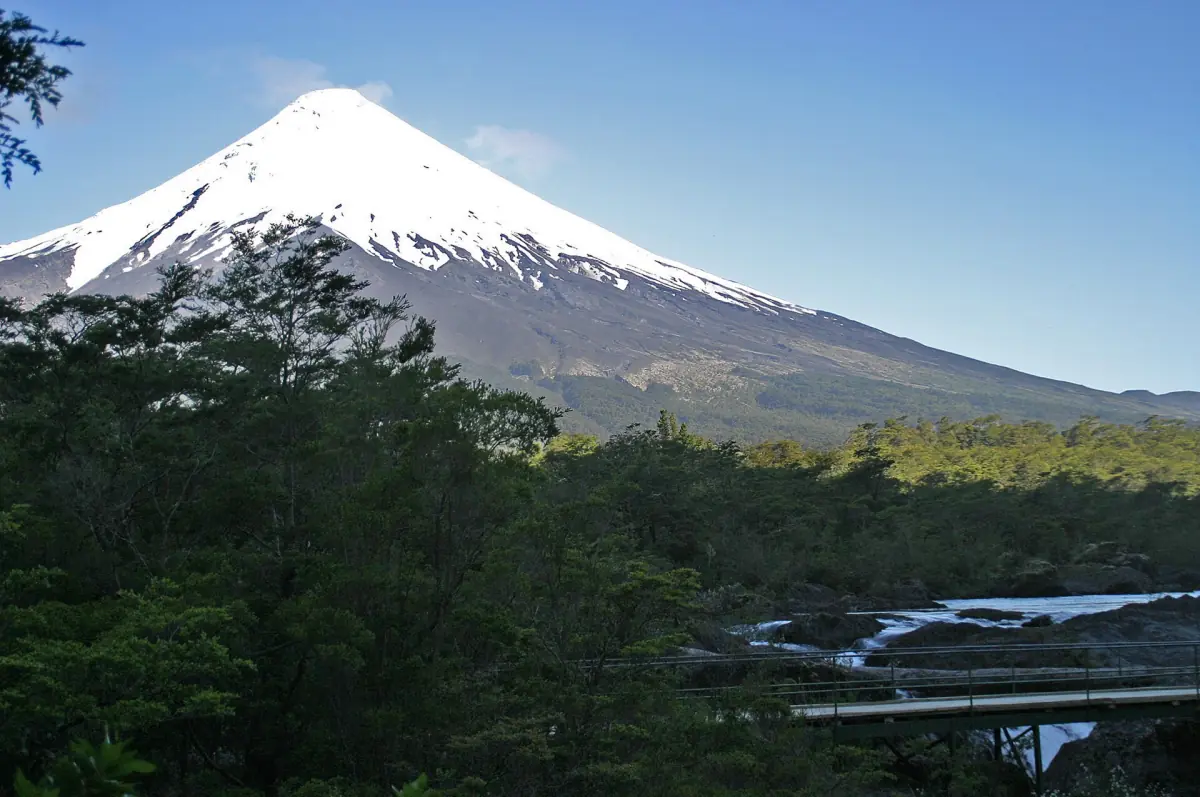
Osorno volcano
A landscape to see from the lake shore.
Seeing it
Osorno is the snow-covered cone that rises above Lake Llanquihue. The easiest way to see it is from the shore towns, where it is part of the view.
Going up
Do not apply the rules of the Villarrica volcano to Osorno. Access, any lift and the conditions on the slopes differ, so check the current situation with a local operator before you plan a visit.
The northern volcano
Villarrica is under a technical yellow alert since 4 September 2026, and an early preventive alert applies to the communes around it. A climb to the crater is only possible with a certified guide, and nobody can promise that it takes place on your day.
Villarrica volcano →Plan the rest of your trip
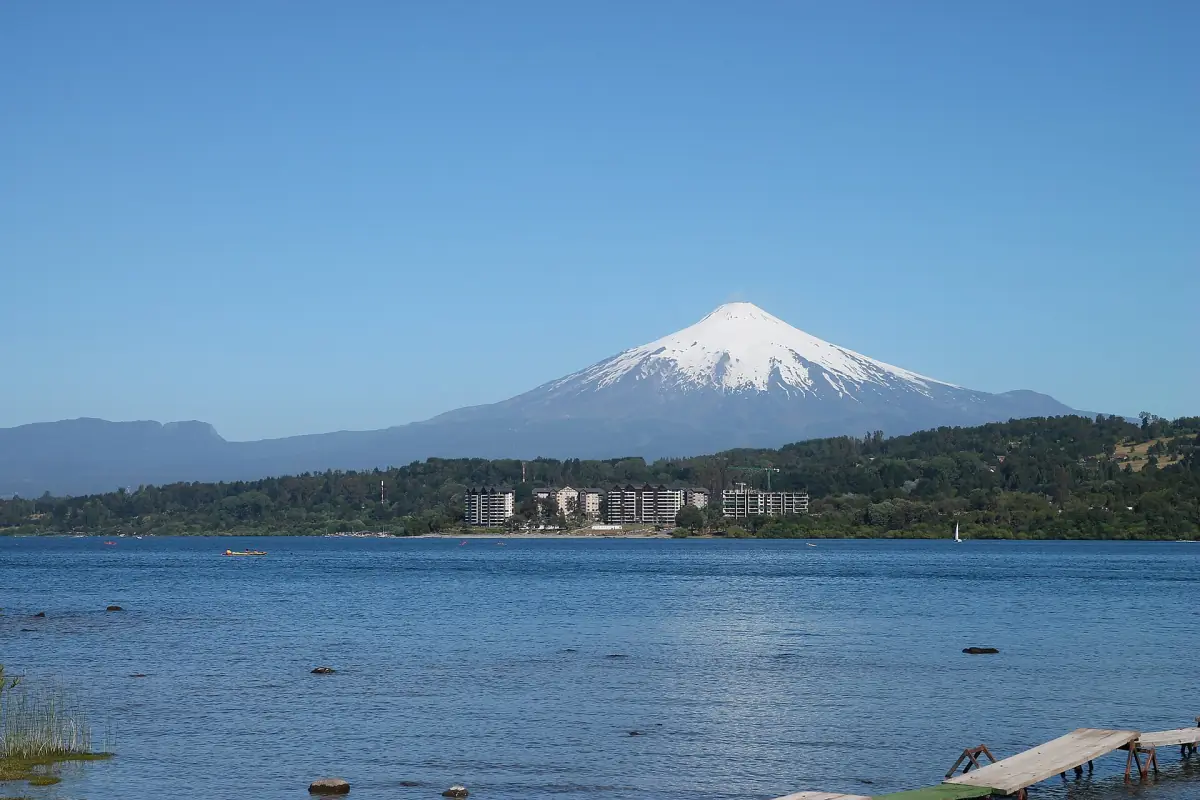
Next steps for the northern part of the region.
Chile Lake District: frequently asked questions
Where is the Chile Lake District?
It is a region of lakes and volcanoes in southern Chile. This site covers its northern part around Villarrica and Pucón in the Araucanía, with side trips into the neighboring Los Ríos region.
How far is Puerto Varas from Pucón?
One booking platform lists an average bus ride of about 4 hours for 325 km from Pucón to Puerto Varas. A listing in the other direction shows around 5 hours. Both are orientation values, so check the current timetable.
Can I do Pucón and Puerto Varas in one trip?
Yes. Plan the move south as its own travel day, because the way is long and stops such as Huilo Huilo add time.
Which airport do I use for Puerto Varas?
El Tepual in Puerto Montt (PMC). The official portal estimates about 20 minutes on Ruta 5 Sur from there to Puerto Varas, which is a rough guide only.
Can I climb Osorno?
That depends on current access and conditions, which are not the same as on the Villarrica volcano. Ask a local operator about the present situation before you plan it.